Progressive Loading for Achilles Tendinopathy: A Modern Physiotherapy Approach
Achilles tendinopathy is a common condition seen in both active individuals and the general population. Characterised by activity-related pain, stiffness, and reduced performance, it typically presents with tenderness 2–6 cm above the heel. Morning stiffness and discomfort during or after running or jumping are hallmark signs. Despite its prevalence, effective management requires more than rest—it demands a structured, evidence-based approach.
Understanding the Problem
Achilles tendinopathy is not primarily an inflammatory condition, but rather a degenerative one. Repeated overload leads to microtrauma, resulting in collagen disorganisation, reduced tendon stiffness, and impaired load transmission. Risk factors such as sudden increases in training load, poor footwear, limited ankle mobility, and biomechanical issues (like excessive pronation) further contribute to tendon stress.
Because of these changes, traditional approaches focused on rest and passive treatment are often ineffective. Instead, rehabilitation must target tendon remodeling and restore its mechanical properties.
Why Progressive Loading Matters
Mechanical loading plays a central role in tendon healing. Too little load leads to weakened tendon structure, while excessive load can worsen injury. The key lies in controlled progressive loading, which stimulates cellular responses that promote collagen production, improve tendon structure, and reduce pain.
Research consistently supports this approach, with studies showing over 60% improvement in pain and function when progressive loading is used as first-line treatment. Importantly, this highlights a shift away from prolonged rest toward appropriately dosed activity.
Evidence-Based Loading Strategies
Two primary loading strategies are widely used:
1. Eccentric Loading (Alfredson Protocol) This involves controlled heel-lowering exercises performed twice daily over 12 weeks. It has been shown to improve tendon structure and reduce pain significantly.
2. Heavy Slow Resistance (HSR) Training This approach incorporates slower, controlled strengthening exercises with added load.
While outcomes are similar to eccentric training, HSR may be more comfortable for patients, improving adherence.
Both methods effectively stimulate tendon adaptation, increasing strength and promoting healthier collagen alignment.
Progression and Monitoring
Successful rehabilitation requires careful progression. A practical guideline is to increase load when pain remains at or below 5/10 during exercise and does not worsen the following day. Monitoring tools such as patient-reported outcomes and functional testing can help guide this process.
Physiotherapists should also assess biomechanics, load tolerance, and individual goals to tailor programmes accordingly. Rehabilitation is not one-size-fits-all—it must be personalised.
Supporting Long-Term Recovery
Recovery from Achilles tendinopathy takes time. Initial improvements often occur within 4 weeks, with significant gains by 12 weeks and continued remodeling beyond 6 months. Setting realistic expectations is essential to maintain motivation and adherence.
Education plays a crucial role. Patients should understand that some discomfort during exercise is normal and not harmful. Empowering individuals with self-management strategies, pacing techniques, and clear goals improves long-term outcomes.
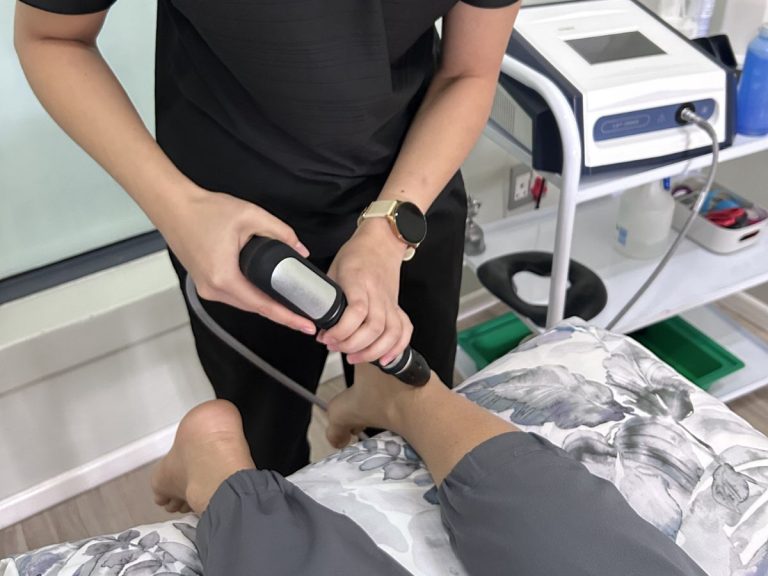
Adjunct therapies may provide short-term relief, but they should never replace loading-based rehabilitation. Addressing underlying biomechanical issues and maintaining ongoing strength work are key to preventing recurrence.
Final Thoughts
Progressive loading is the cornerstone of effective Achilles tendinopathy management. By understanding tendon pathology, applying evidence-based loading principles, and individualising care, physiotherapists can guide patients toward meaningful, lasting recovery.